Sometimes I spot things in my information flows that just feels like I have something akin to spidey sense, not the sensation of danger, but the sensation of, let’s call it “web woah.” I claim no accuracy nor super power (c.g. relevance).
I felt that when I read a post by Terry Godier about his novel idea and implementation of Current, an RSS Reader that looks like it breaks the mold of how we read feeds.
I still have not yet tried Current yet, hey I get distracted. I saw positive replies from Frederic Graver who did try it, as well as a note from Doug Belshaw who was not crazy about it being Mac only. In fact Doug, who seems to build things while he sleeps, ended up creating his own variant he calls Stream.
Maybe one reason I perhaps peaked interest is I am not quite sure I have the same issue Terry described:
I started building Current before I had the words for why.
The impulse was simpler than a philosophy: every RSS reader I tried made me feel bad. Not because the apps were ugly or broken (most were quite good) but because they all seemed to agree on something I didn’t. That reading the internet was a task. That articles were items to be processed. That falling behind was a failure state.
I didn’t have a name for this yet. I just knew I wanted a reader that didn’t make me feel like I owed it something.
https://www.terrygodier.com/current
He names it as a phantom obligation.
It looks like Current has a means to generate a whack sack of feed content from variably rated flows into a more coherent flow for reading, with feeds have user defined “velocities” and variable life times. I get that, its saying not ever post that comes in to your reader has the same weight of importance.
His rationale is just plain sane. And I have no criticism
I have never felt that obligation of need to get to “Feed Read Zero”. I leave my reader chock full of unread stuff that eventually slides away. Once in a while if I feel like being tody, heck I just mark them all read.
Reset.
But maybe my reading habits are different. I subscribe to I don’t even know how many feeds upwards towards 200? But I do not look at all that flow at once. Nor do I go through source by source and read them all.
My reading is more like… different sized puddles, because I organize them into folders that are loosely topic oriented. Look at how many I have unread and I have zero stress.
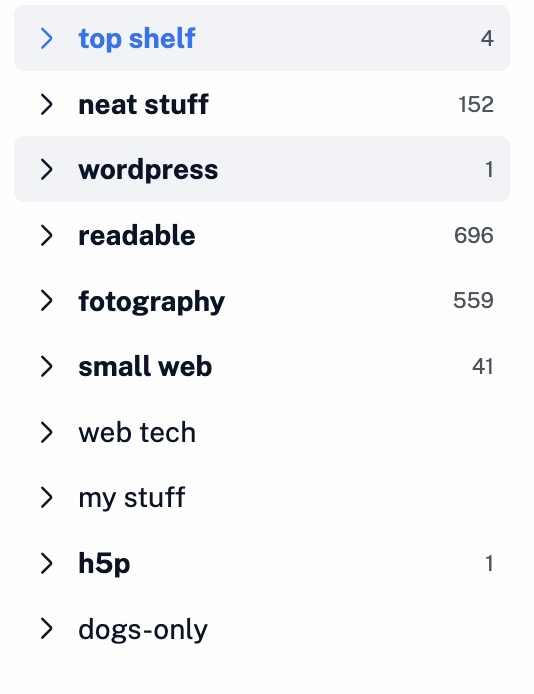
Most of the folders I rarely glance at, the main one is “top shelf” and those are the friends and colleagues blogs I do want to read much more frequently.
This is a variant I think of a strategy from Alec Couros I followed long ago for that Bird Name Social Media site that was popular 10 years ago. Alec had blogged about (when he used to blog) that he would follow like 10s of thousands of accounts but did not read them, he would focus on a twitter list, of the ones that were most important to him. I still do that in Mastodon, I almost never look at the full flow.
The other folders are ones I just glance at time to time, but often just let them flow by. If I find something important, I typically bookmark in Pinboard, but I have no angst about leaving the unreads pile up, heck it does get to quadruple digits sometime. And eventually they flow down the pipe.
I am not saying I do this any better or smarter that Terry or Doug, and we all have different sources we are tracking. I just do not feel the same obligation, and have some uncertainty whether I need a new flow/current/stream.
At the same time, I have yet to try Current, and it could change my approach completely. Maybe I have some reluctance of tailoring a new reading approach when I find my current one is ok.
There may likely be a future post where I rip this one to shreds for my idiocy. That’s always a string possibility.
I’m looking at my puddles of feeds, maybe a current would be a good thing. Still, it was refreshing to read the clarity to the design decisions Terry made.
To be blog-tinued.
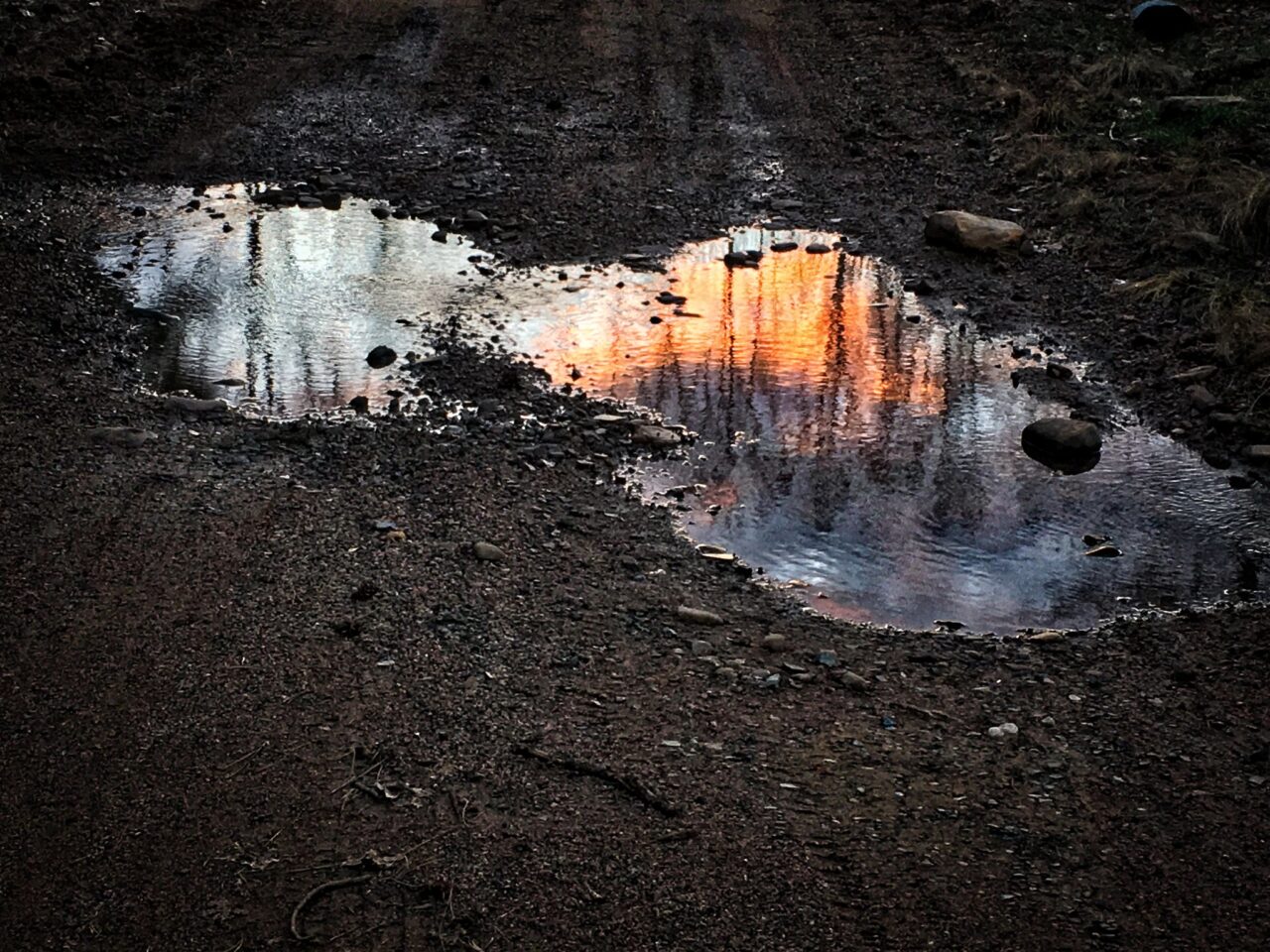
Featured Image: 2017/365/45 A Sunset Fell into a Puddle and Flowed Away Downstream flickr photo by cogdogblog shared into the public domain using Creative Commons Public Domain Dedication (CC0)