
Let’s play the game of quibbling about how memory works.
In ever so epically and humanly and Audrey-ly written, in her recent post Foolin’ Audrey Watters says:
I sometimes joke that my brain is full of all sorts of stuff like this — useless stuff, one could easily dismiss it as — which takes up the brain-space in which I could have, should have used to preserve other, more important information, such as everything I learned in math class in 1983, the year that Pyromania was released.
But — record scratch — that’s not how the brain works. Facts and memories are not files stored in a database, and there is no “storage full” warning when you hit capacity. There is no storage capacity. You don’t have to delete old knowledge — say, functions, which I’m certain that, at some point in eighth grade, I did know how to solve — in order to make room to stick new knowledge in your head.
The brain is not a computer. The computer is not a brain.
https://2ndbreakfast.audreywatters.com/foolin/
And she lays this on the AI hucksters who want you to stick with the brain as computer broken record — “as the industry’s hustlers try to convince you that you don’t even need to stick new stuff in your own head anymore; you can just plop it into an LLM and magically, personal knowledge will emerge.”
Sure, this is how memory works, in the “memory game” which even as a kid I thought was a ridiculous kind of game. But go ahead and play, I needed an excuse to dust off my “memory” of how H5P content worked.
I bet you played, right? How many animal pairs did you store in your brain database?
Now that I think if it, I am not even quite sure why I tossed it in, other than to make use of my own little H5P cog shop (that’s another post).
But since Audrey started with a musical memory frame for her post, growing up rocking out to Def Leppard, at the top of my recent, non computer memory is also a beautiful framing of memory, that ironically comes from a podcast about rock music.
Indeed, my friend Gardner Campbell got me hooked a while ago on the podcast I told him at first I doubt I would listen much to A History of Rock Music in 500 Songs — and I was wrong. I am totally in on a fan of the insane amount of research host Andrew Hickey does to put a rock song in historical context.
And naturally, because my memory rings very strong with my high school era when I got hooked on the music of The Who (it was the album the Kids Are Alright that was my gateway). So the recent 500 songs episode 183 on Pinball Wizard (essentially covering the whole Tommy album) had an opening bit of writing that just revved up my reading interest.
I will long quote this because it’s so damned good
One of the things that people often get wrong is how memory works. Thanks partly to our own intuitions, and partly to the work of Sigmund Freud (who of course attempted to get the study of the human mind onto something like a modern scientific basis, but whose work when compared to current psychology and neurology is roughly equivalent to pitting Aristotle’s conception of physics against the latest results from the Large Hadron Collider), we think and act as if our memories are accurate records of what’s happened to us — that when we remember things, it’s as if we’re looking over a video recording of the events that happened.
We now know, though, that this isn’t how memory works. You don’t store a recording of what happened and leave it there untouched until you come to think of it again. Rather, very quickly after a memory is formed, it starts to degrade — you lose details. But if you think of it again, you fill in the missing details as if you’re remembering them. Then, next time you remember the event, you remember those filled-in details as if they’re part of the original memory.
Every time you think of something, it reinforces both the original memory and whatever new details you’ve added in subsequent rememberings, so important, memorable, or traumatic events that you think about constantly get reinforced, and the original details stay stronger. But if you’re trying to remember something that happened decades ago that you haven’t thought about in the interim, you’ll get almost nothing right — but it’ll sometimes still *feel* like you’re remembering every detail as if it were happening right then.
This is, of course, why in so many of the stories I tell in this podcast people give radically different versions of events from each other, none of which match documentary evidence. They’re not lying (usually) — they’re just telling everyone else the story that they’ve told themselves. Because that’s all memories are, really, stories we tell ourselves. And if we don’t get reminded of them frequently, they drift from reality.
https://500songs.com/podcast/song-183-pinball-wizard-by-the-who-part-1-always-playing-clean/ emphasis added by me
Hickey shoots down the memory as writing to disk storage concept, but even better gets to the notion that the retelling, the re-remembering of experiences we’ve lived, is not only what reinforces it, but also creates the memory we construct, not stored as a perfect series of “facts”.
It’s why I love the blog as the place I write memories first in the time they happen, but then regenerate tem if I link back or stumble over them, and as well whey I ended up mopping up messes in opld posts, or fixing links, or adding details I missed the first time.
I am at work making memories of the stories I blog myself.
This will come into play when/if I write more on my memories of working with storytelling.
But sure, make memory as good as clicking cards with pictures of the same animals, I have the memory stories I have told myself about each of those animals. Ain’t no LLM that can touch that, because I have lived the memories, felt the pains and joys.
I remember what I retell or heck, I can even change it up.
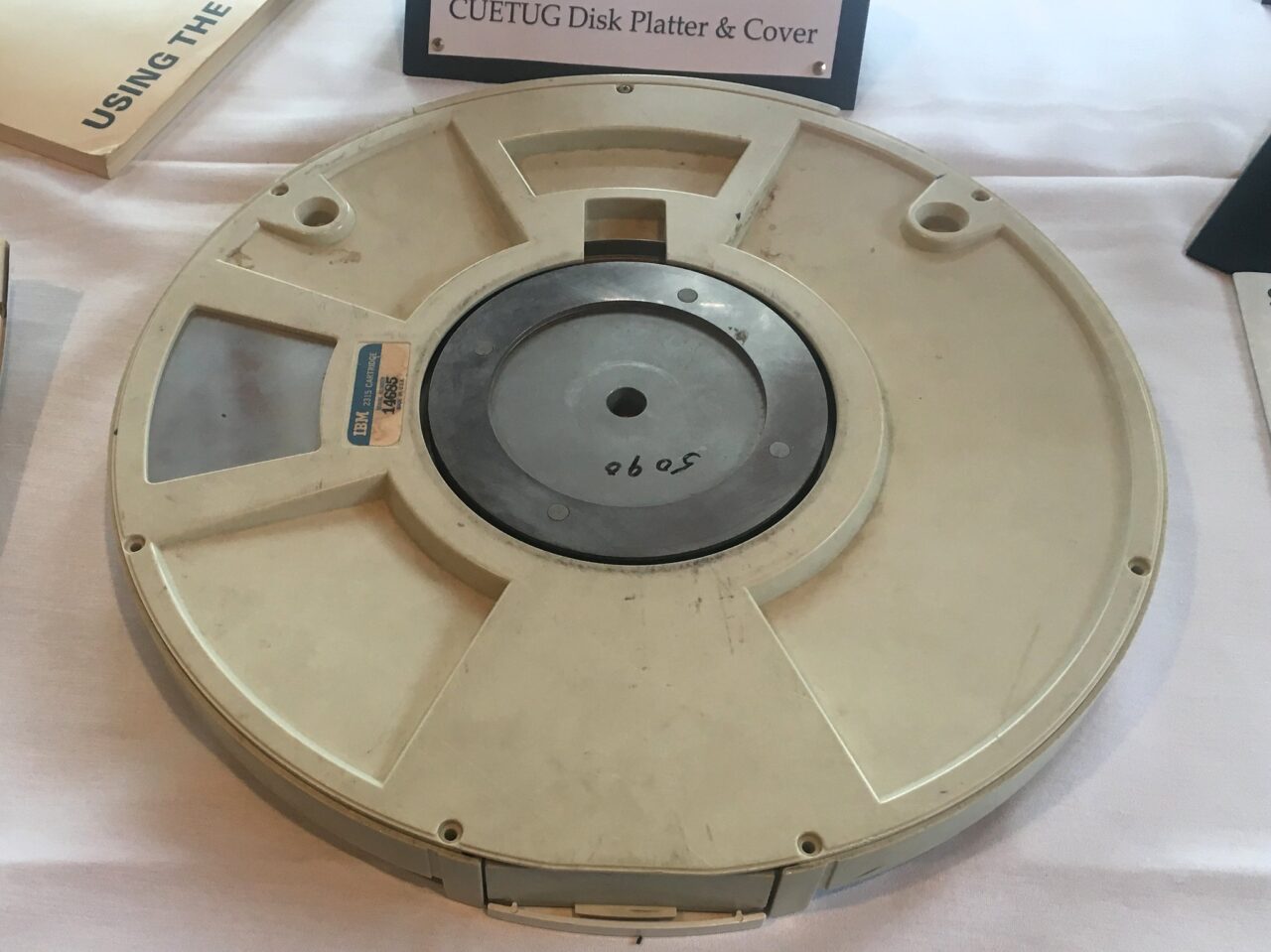
Memories… serve them up on a platter.
Featured Image: Data Served on a Platter flickr photo by cogdogblog shared into the public domain using Creative Commons Public Domain Dedication (CC0)
 Share this barking on social media