
As a younger Alan, I could never forecast a future where I might be writing about enjoying cooking. That’s for other people! While I always haved loved food and eating it, strangely I am now at a point where the process, especially the inventiveness of it, is rather exciting. I mean to go from a collection of various ingredients to a meal one can share is enjoyable.
As right now I am making zucchini pancakes without any kind of recipe nor measusing ingredients, loosely based on how my mom described making potato latkes, I’m blogging in my head (well the idea has been simmering there as the title). My lessons are (maybe as I have not written it), recipes are helpful guides, but need not always be followed to the letter; why buy pre-packaged mixes when you can use stuff on the shelf, cooking is experimental, and it’s a metaphor I have rolled out often. But what there is more- stick around to the end for a most amazing web site for dealing with recipes. You will not be disappointed.
I just say that I rather enjoy putting something on our plates that I was able to do from stuff in the kitchen, just poured from a box or warmed from a frozen packaged. Cooking is doing, and I like the doing. It’s also a bit meditative in the process.
Me Cooking?
Sure, through grad school and into adulthood (yes in that order), I managed to do spaghetti, grill things, basic stuff. My first year as a rad student at ASU, I was amongs a number of other students who did not have the funds to travel home for thanksgiving. I got it in my head to invite any others for a dinner in my studio apartment, share as one did in 1987 by taking an announcement on the bulletin board. It dawned on me– I had no idea how to even bake a turkey! I called my mom on the phone who gave me the steps, which even now amount to (1) buy a turkey; (2) toss on seasoning; (3) place in oven.
Much of cooking is almost as simple as (1) Heat Food (2) Add Spice.
My “cooking” while living in grad school was likely a lot of canned soup, grilled cheese, spaghetti from a jar, and of yes, tossing a bunch of stuff in ramen noodles, hot dogs were my beef.
But it was really after the breakup of my first marriage that I found myself desiring to make meals. I still have a paper folder of recipes friends and family shared on paper, or sent by ermail that i printed out, or I found online.
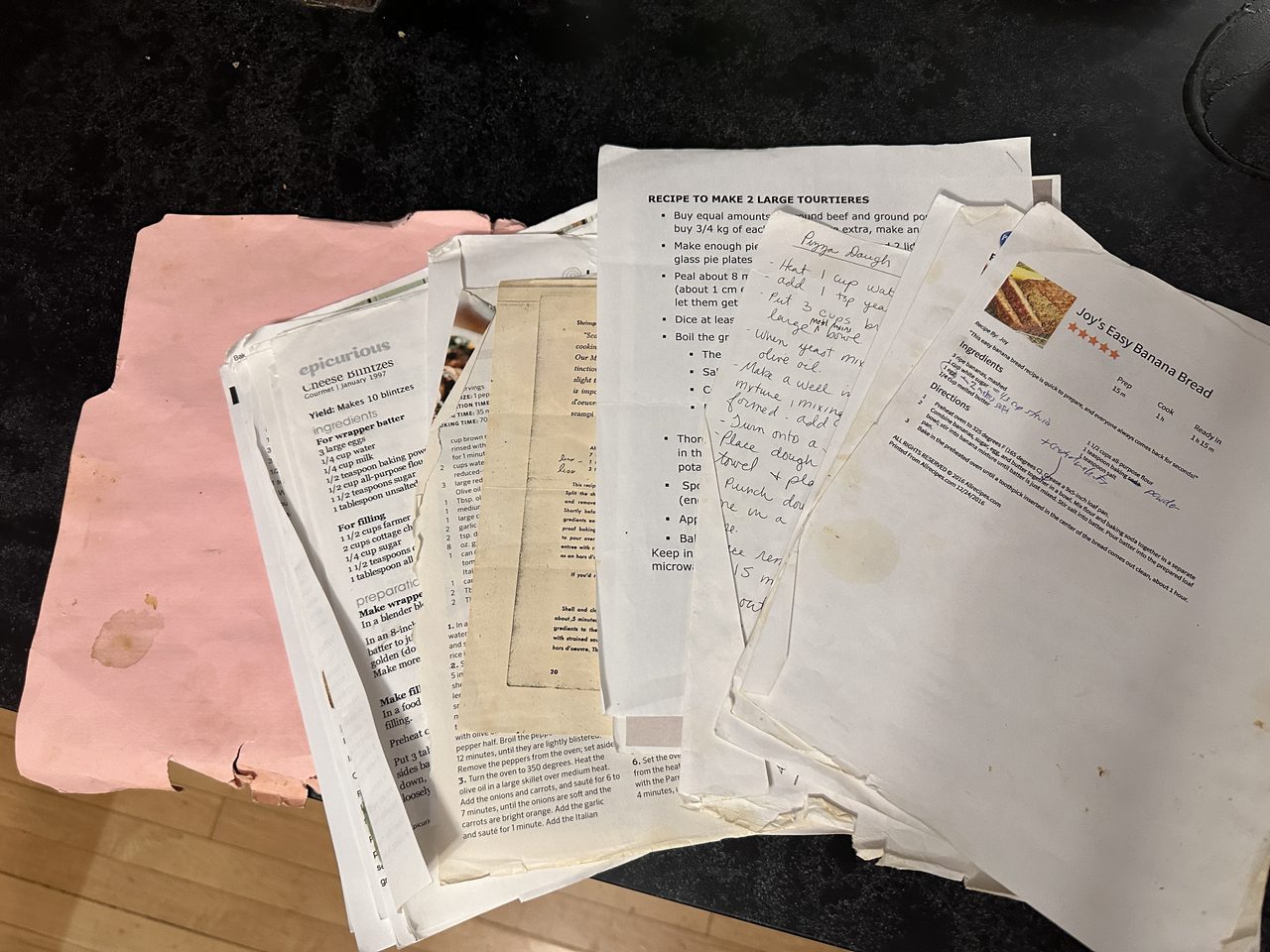
The hand written one on the right middle is my sister Harriet’s always reliable pizza dough recipe. She quite impressed me in 2009 when I flew out to the Caribbean to spend a week on the 42 foot sailboat she and her husband Skip wintered on– one night she made her own dough for pizza cooked on a barbecue grill hanging on the back of the boat! She gave me a hand written copy of her recipe and that original paper is in my folder. And I cant count how many times I have made dough from scratch.
On a later visit to me in Strawberry, she also showed me how easy it is to do an apple pie using the Pillsbury Basic Apple Pie recipe, another successful run I lose count how many pies I have made. For quite some time I bought the pre-made pie shells, but realized later that making it from scratch was super easy with a Home Made Pie Crust recipe I found online.
I did much” cooking” on the barbecue grill, but took on baking ham, some noodle casseroles, and always some kind of spaghetti. Oh yes, a legndary story on one of my mom’s visits when I cooked spaghetti and added some canned sauce. She remarked that the sauce was a little “weird.” I agreed. On checking the sauce jar I discovered I had cooked spaghetti salsa! I actually tweeted it and got endless ribbing from David Jakes.
Skip Prepackaged Stuff
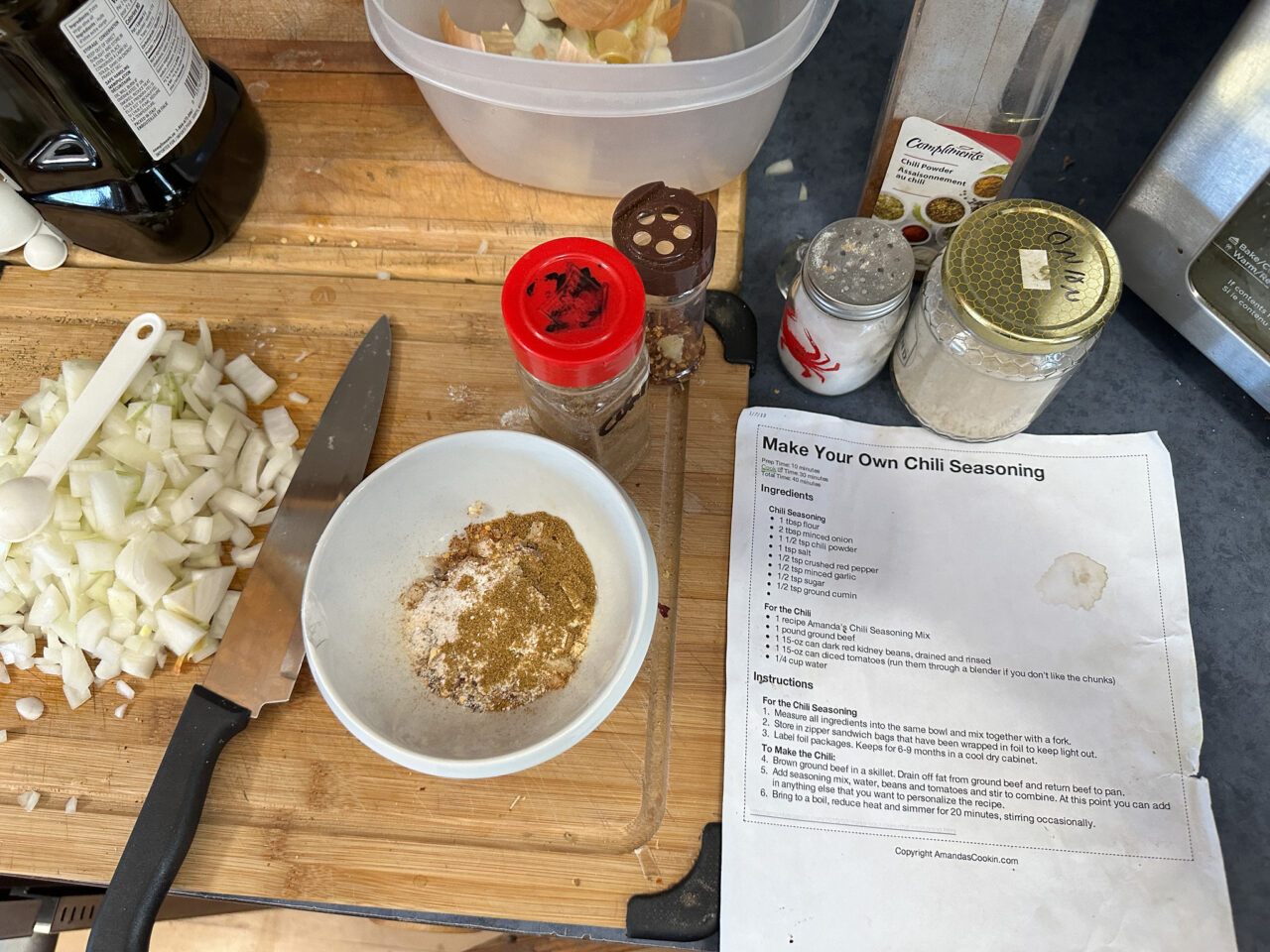
Chili has always been a staple. For long I did iy ther way I remember Mom doing it, brown some ground beef, pour in a can of tomato sauce, and a few more cans of beans… and then top off with a pack of the staple McCormick seasoning mix. At some point in the store, I am reading the ingredients on the packet and the brain goes THUNK. It’s just seasoning I have in my cupboard. Why am I paying more money for a bag of seasoning (and preservatives), Surely (yes Shirley) there is on the internet a recipe to make your own.
That’s the mix in the featured image for this post.
Does the Precision Always Matter?
I’m sure many people are meticulous to follow a recipe like its the law. I do think measuring matters a bit mor efor baking so for proper amounts of yeast. But when I’m working in the kitchen invariably end up finding all those 1/2 and 1/4 teaspoon measuring tediuos so when I make my chile seasoning I just dump/estimate. Like do the people who publish recipes really try every permutation of ingredient amounts, holding all constant except one in a series of controlled experiments? Hah. I frankly enjoy the cooking by tossing stuff in- that’s like my main approach to say soup.
All the recipes that call for something like one clove of garlic I eye roll. I always put much extra garlic in.
Experimentation is More Fun than Rule Following
The fun part of cooking (at least for me) is things you can improvise with. Given my sister’s dough recipe, what goes on top of the pizza is pretty much whatever I can find in the fridge. And I have a few things I make just from memory. My mom long ago gave me over the phone how she makes potato latkes (potato pancakes), more or less shredded (and squeezed) potatoes, some amount of egg (1? 2?), flour (how much/little?), bread crumbs, and some seasoning. I just toss stuff into a bowl (also works for zucchini).

And experiments can fail. I have certainly over seasoned some meats. Or made some rather bland dishes. There was the squash soup I thought would be “interesting” with some jalapeño in it (too hot to eat).
Oh yeah then there are some little additions I use and have no idea if they really make a difference, but I trust the person who suggested them. For my apple pies, I remember my grandmother’s suggestion to put a few pats of butter atop the filling before you put the top on. My mom, who volunteered making meals for her synagogue, always said the secret to her tuna salad was putting in a bit of sour cream with the mayonnaise (how much? shrug, see experimentation). My friend in Arizona, Barb, who cooked at a place in Pine called The Randall House (no longer there but the wen site I made for here is?) told me a secret to her French Toast was a bit of orange juice in the batter.
One time when Cori and I were staying in a rented cabin, I took stuff to make chili but forgot the seasonings, all I had was a little backpack seasoning mix I had carried around for years. It worked great.
Would I know scientifically if these really make a difference? I have forgotten them a few times, but the food still tastes good. But I enjoy honoring the advice from friends and family.
Milking the Metaphor
I am hardly the first to use cooking as a metaphor, and the peak of that experience was the H5P Kitchen project I did with/for BCcampus from around 2020-2022. I an’t remember the exact specification I got when Clint Lalonde invited me to run a community building effort in BC around using H5P in Pressbooks… oh wait I do have information on my opwn site. This was supporting an H5P OER Development project also related to their work on Open Homework Systems (all the links I cannot find anymore after the redesign of their web site).
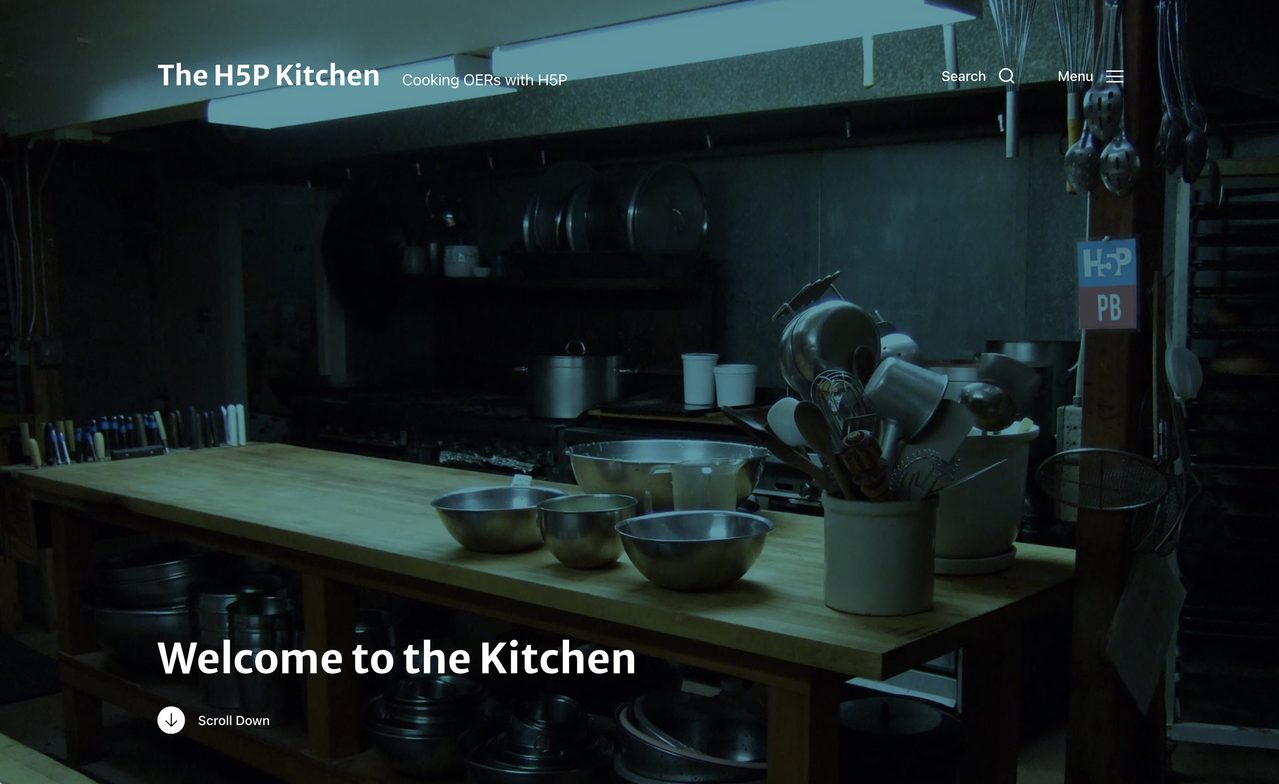
But I went full bore with the cooking metaphors as an approach for tinkering and creating with H5P.
Kitchens are a common feature of all homes and often are gathering spaces for conversations. The foods we prepare there are immersed in cultural and familial tradition. It does not matter if you warm frozen dishes in a microwave or create everything from scratch, it is still cooking.
While we have the formulas of recipes, there is no absolute best one out there. Cooking is also creative when we experiment and vary from recipes or just “wing it.” We rely on tools, gadgets, yet the act is very hands-on tactile. And while cooking can get messy, we can always clean it up afterward.
We see the work on these projects having many of these elements- we have appliances like our H5P and Pressbooks platforms as well as other media tools, we try different recipes/methods, and we also apply what we know from our own tradition of teaching. These kitchens are the places the activities being created to augment the experience learners have with open textbook content.
https://kitchen.opened.ca/about/
Around the same time, in a general conversation with my good ffiend Gardner Campbell he talked about the book Salt Fat Acid Heat that boiled cooking down to those four elements. This so fit!
A well-written and thoroughly tested recipe might tell you how to produce the dish in question, but it won’t teach you anything about how to cook, not really. Truth be told, recipes are infantilizing: Just do exactly what I say, they say, but don’t ask questions or worry your little head about why. They insist on fidelity and faith, but do nothing to earn or explain it. Think how much more we learn —and retain!— when a teacher doesn’t just enumerate the step-by-step instructions but explains the principles behind them.
Armed with reasons, we no longer have to cling to a recipe like a lifeboat; now we can strike out on our own and begin to improvise. Even though it contains plenty of excellent recipes, this is a book concerned foremost with principles.
From Michael Pollan’s forward to https://www.saltfatacidheat.com/
I even tried to stretch that to Four Elements of Open Homework Practice Problems. The metaphor played out in the series of webinars (I recall I did the videos from my kitchen) with guest chefs including the top chef at the time, and projects ending as books on the recipe shelf. I pulled the taffy out of the metaphor for a series of online workshops.e.g.
which included sections related to dealing with the array of H5P tools like You Don’t Start Cooking By Reaching into the Utensil Drawer.
I may have overdone the metaphor, but it was so fun to do that. Heck I even took it with me to OEGlobal as an attempt at an asynchronous series of activities I labeled as the H5P Food Truck.
The Mess of Online Recipes and… the Magical Cooked.Wiki
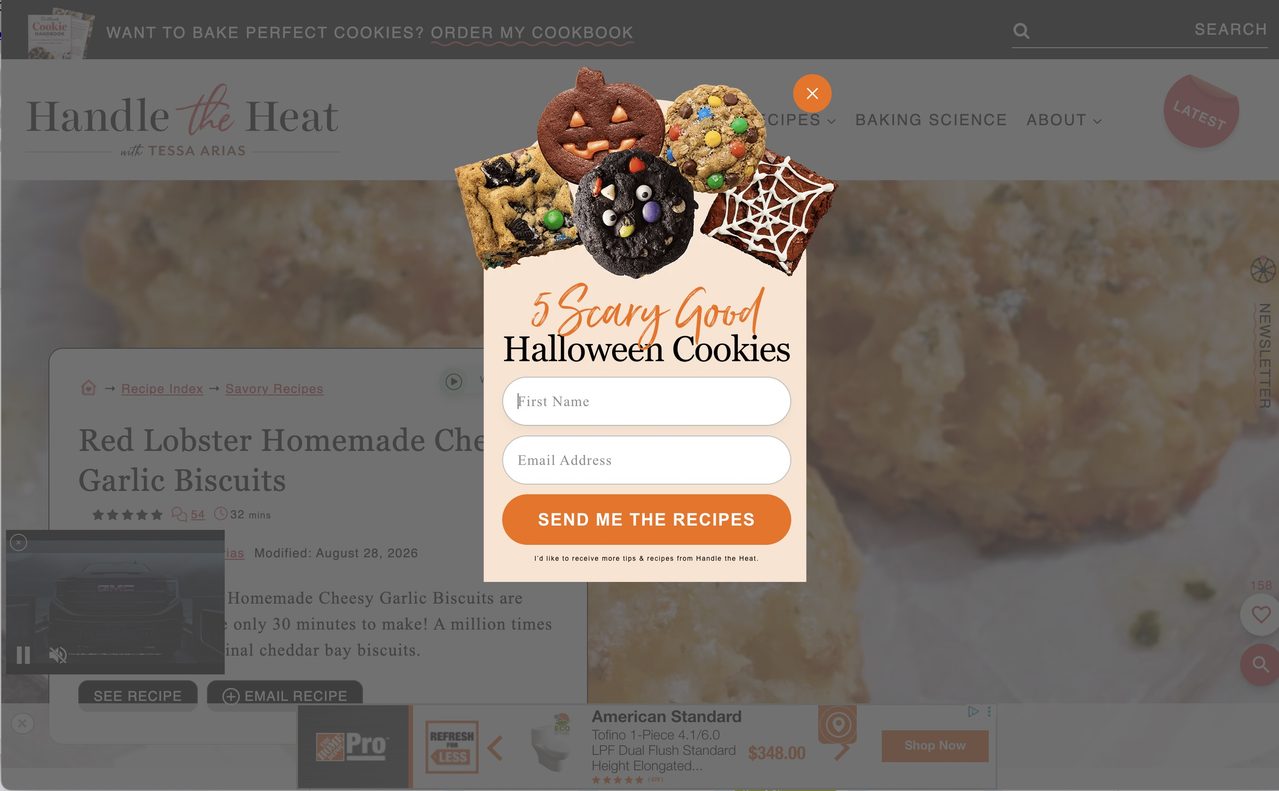
If you have tromped through all my wafflings (get it) you made it to the real thing I want to share here. All along I relief much on recipes I found on the web. You know the thing about those recipes- you have to wade through a long scroll of storytelling and pop up ads and videos from the chef, to actually get to the receipt itself (even if there is a “skip to recipe” link its still a lot of crap to go through.
As an example, here is one I use often for garlic cheese biscuits, my daughter Jessy Lee shared with me. It checks of my two boxes of (1) easy to do / small number of ingredients; and (2) good results. But when you go to the recipe, again, there is all the effort to actually find it.
Compare that to my version. Same recipe, but with none of the cruft.
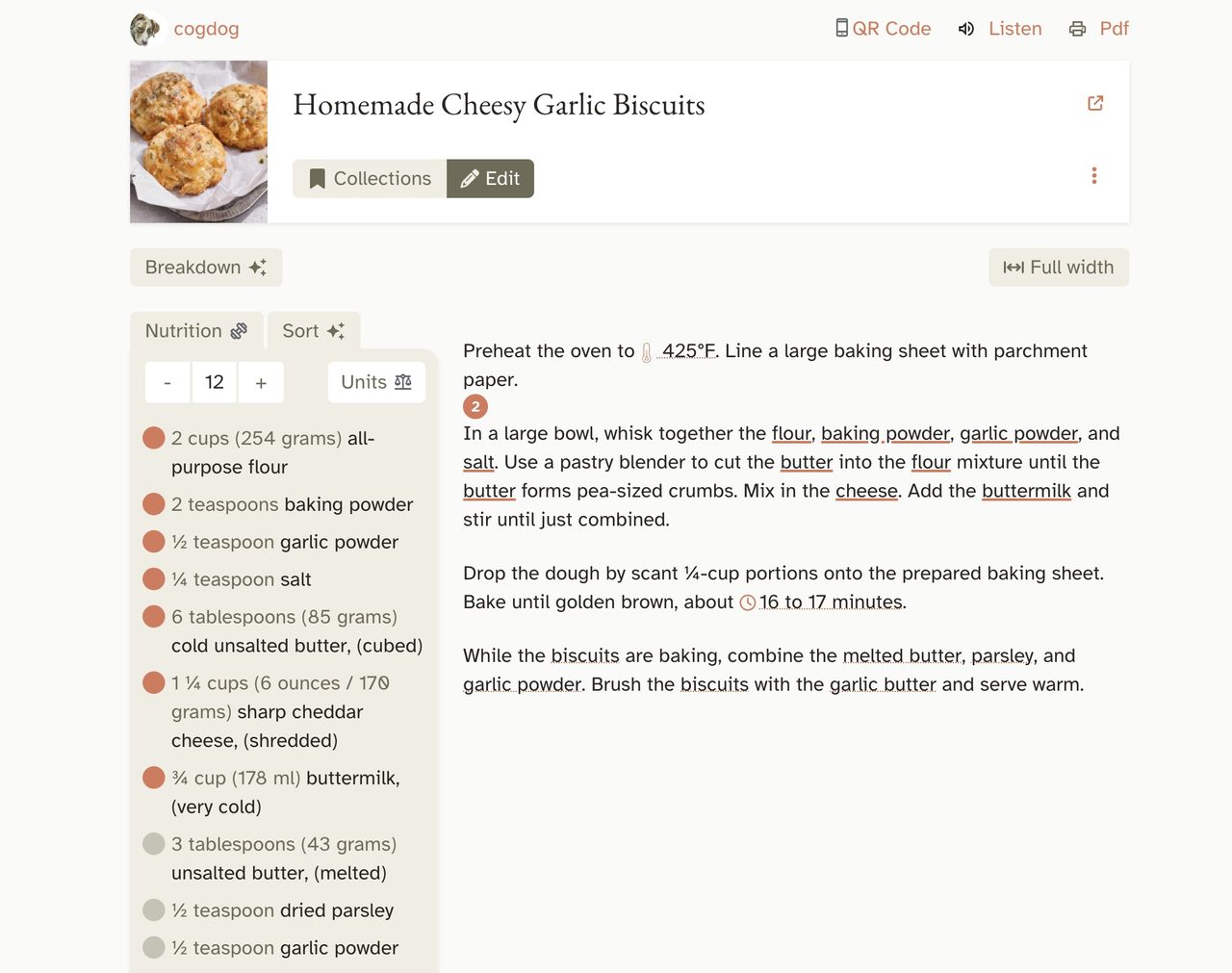
This is the result of the Amazing Amazing site Cooked.wiki
See how amazing it is, take any online recipe, let’s say for pumpkin pie https://preppykitchen.com/pumpkin-pie-2/ It’s not the worst example. Now when you have that in your browser bar, just insert in front of the URL https://cooked/wiki/ or see what happens https://cooked.wiki/https://preppykitchen.com/pumpkin-pie-2/
Dod you say “Woah”?
It extracts everything from the web recipe into the same format, structured format of ingredients on the left, steps on the right. And you can use this for free. If you create a login, you can save all the recipes you run through it (my collection) which can also be shared (if you clicked any links for my recipes above you will be there). Another neat feature is that once saved in your account, you can edit or add to a recipe, so you can keep the details you may have previously annotated on a card or a printed recipe. You can also add photos of your own versions made.
Cooked.wiki (techncally not really a wiki) is described “Founded in 2022, Cooked was the first to use AI to turn cluttered websites into clean, accessible instructions. We have been featured worldwide as one of the most innovative cooking tools.” It’s the project of one person Eduardo Gonçalves a developer from Lisbon.
I am huge fan of web tools that you can call into action simply be pre-pending a URL in front of another one (like putting https://archive.ph in front pf a payalled URL to jump the wall) – to me it is a simple idea of the web as one of Jon Udell’s descriptions of an innovation toolkit- you can do something simply by manipulating a URL.
I love Cooked.Wiki so much I have been a paying supporter, you get a few more nifty features as a patron. One that I tried is uploaded a photo of a handwritten or printed recipe and Cooked.Wiki can do its conversion magic. Here is a recipe one of Cori’s students gave her written out by hand on a card (it has a side 2)

And see how Cooked.wiki puts it into the regular format https://cooked.wiki/saved/178ee141-da1f-4403-9f84-ecaea4feacc4
I’ve not tried the other features like having recipes read to you by an AI voice. but its interesting if you want to have a family member just describe a recipe by voice, Cooked.Wiki can construct it into the recipe format.
To me. the elegance and usefulness of Cooked.Wiki is the best of the web.
You are welcome.
Now go cook something, willya?
Featured Image: Don’t Buy Packets of Preservatives flickr photo by cogdogblog shared into the public domain using Creative Commons Public Domain Dedication (CC0) Get the Chili Season recipe from Cooked.Wiki
 Share this barking on social media