
Way out here on the marginal reaches of the withering web, the connections that weave together are of statistical aberration, where no language model of any size would draw a path.
As thus it was following the adventures of Stephen Downes as he bicycles around Iceland that got me thinking of places I saw there for my month of house sitting in 2008 including a Gigapan panorama image I made on my last day seeing Thingvellir somehow becoming used in print form in a 6 foot printed high atlas.
Find the thread there!
And thus I am spending more time in 2026 re-writing a blog post from 2010 fixing links, adding images, and filling in what was a skimpy post. Why? Shrug. Because it’s my blog and I care about what’s left there hanging in the dusty corners of not too many people’s interest.
Zzzzzzzzzip rewind, let’s dial this back a few clicks.
Following Stephen Downes Iceland Bicycle Trek
I gotta admire how Stephen retires, far from puttering around on a golf course and sleeping in, he flies to Iceland with his bicycle and camping gear to explore. Not only that, somehow he is still reading papers and web sites to post to OLDaily- you can follow his bike adventure in Mastodon via #SDdaily.
It’s also a bit nostalgic for that month in 2008 when I live in Iceland to house sit for a family on vacation with my main responsibility of counting their 17 Icelandic horses in a pasture and tending a sweet Icelandic sheepdog named Skinna.
When I saw Stephen was camping near Geysir, I commented from my own memories of seeing natural landmarks there that anywhere else would be a park with fees and crowds.

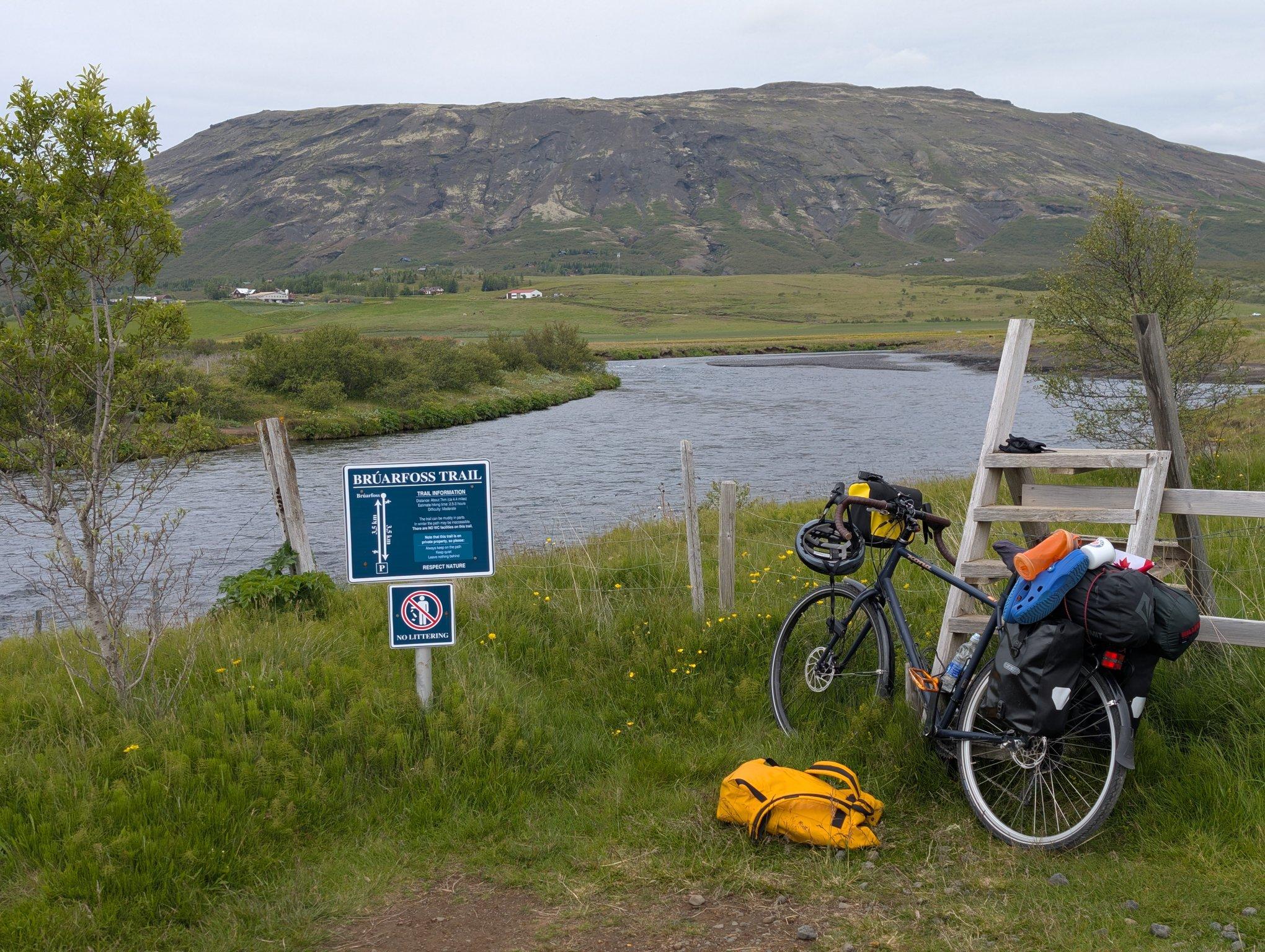
Though yes, Geysir is a tourist draw for the Golden Circle, so not as quiet as some other places I remember like the majestic waterfall Seljalandfoss that I had to myself for hours. But in his reply Stephen mentioned that he had hoped to ride to Thingvellir, but was challenged by the grade (it looks like he did get there).
And thus the cascade of memories.
From that one place name.
Thingvellir 2008
I only got to Thingvellir or more appropriately Þingvellir on my very last day from my month living in Iceland, as it was a place if interest not only for its history as where Iceland formed a parliament in oh the year 980! but also from my university years studying Geology it is a spot to see as a place to see on land the manifestation of sea floor spreading and extensional plate tectonics.
And indeed like most of the places in southern Iceland I explored (by car) in November 2008, there was no one there at this national park. I stood in the rift zone!

And as I was doing regularly in my travels then, I was not only taking digital photos, I was making high resolution panoramic images with an interesting rig called a “Gigapan,” So in the quiet I set the device up on my tripod and set it in motion to collect images.

This device held a consumer grade pocket digital camera, then I was using for much of my travel photos a Canon IXY Digital 3000 IS I had bought in Japan as it was a model not even available yet in the US (it is in the Powershot SD990). The camera was attached to the rack of the Gigapan, and to create an image I used the controls to identify the top left of a large scene and the bottom right. Then you set it in motion, and the robot control moved the camera and pressed the shutter to take maybe 50? 80? separate images in a grid pattern, each image at maybe less than 4 Megapixels each). Later, its software would stitch them together into a single high resolution image by combining all those images into one. And when published on the GigaPan site, viewers could navigate it by zooming and panning, as well as creating “snapshots” of details in the big image.
Here is a video of the rig in action for another Gigapan image captured at Point Lobos, California.
Now here is the funny thing, as I was letting the Gigapan do its thing at Thingvellir, my quiet alone time there ended.
One car drove in, with 3 young men who got out, walked up and said hello (I was at one of the main viewpoint areas). I was shocked when one of them said, “Hey, that’s a GigaPan!” as I had set this up in several locations over a few years, a few in Arizona where I lived, in Melbourne Australia, in Beijing, Hong Kong, Golden Colorado, the Great Sand Dunes south of there- and never had one person recognized what I was using -it did draw a crowd, like a curious pan handler in Beijing (that’s Brian Crosby in the background)

But here, in late November, alone at Thingvellir, some Americans popped out of their car and knew this device, I recall one mentioned being a student at Carnegie Mellon University where it was part of a project, I think he mentioned working on the software.
Thank kind of serendipity often warranted the Amazing Story treatment, but I guess I never added this one.
But wait there is more, and it’s BIG.
My Thingvellir Photo in a Giant Printed Atlas
The image I created there with Thingvellir was not really one of my better ones, I had forgotten to set the camera to lock it’s exposure, so it adjusted as it traversed into more light portions lit by the sun. So the end image has a number of vertical bands. This is a screenshot if the image that was published on the GigaPan site:

The wild thing is that in 2026 the GigaPan site is still online, that seems amazingly unlikely the way web sites are abandoned across the board. The link for my Thingvellir image does not work (originally the viewer relied on Flash), but it does show up if you search for Thingvellir.
Sometime in early 2011 I got an email from a staff person at an Australian publisher named Millennium House seeking permission to use the image in a book, referencing it’s link in the GigaPan site. There was no Creative Commons license options on my image at GigaPan.com but in my reply I stated I share everything elsewhere under a CC BY license, just seeking attribution. As often it was, this was new information to a commercial publisher:
Thank you so much for getting back to me – appreciate the prompt response. Thank you so much for agreeing to allow us to use your image in our atlas.
Feb 28, 2011 email from Janet Parker at Millennium House Publishers
As I’m not really familiar with the workings of creative commons, I’ve been and had a look online– and I believe that we are allowed to use the image with your permission, provided credit is given for the image? Is this how it works? Please advise if there are any fees involved. I’d just like to be sure of the terms and conditions before I arrange for an agreement document to be drawn up (I’ll need a postal address for the document too).
As you will have seen at our website, Earth Platinum will be the world’s largest atlas (at a whopping 1.8m x 2.8m when open!). It’s a limited edition and we will only print 31 copies. I am not yet sure whether all copies of proofs will be needed by the printer, or whether there will be proofs to spare. If there are spare proofs, then we would be happy to send you a copy of the page/s that feature your image (although it may be a little large to fit in a portfolio!).
So I just had to sign a non-exclusive license agreement where all I got was credit in the published book (which is all I ever want, but wait for more). They did require a high resolution image for the scale of the book — if you are not used to meters, the print size of an opened page is 6 feet by 9 feet! The Gigapan software just sent it to the web site in some format that it allowed viewing via a Flash player, so to get them an image I had to run it through Photoshop I think to create a 500MB TIFF that I sent them via ftp.
I got a few updates from Managing Director Gordon Cheers documenting the publication of the Earth Platinum Atlas (as I write this the Millennium House Publishers web site is not reachable), including June 2012 when one of the 31 printed copies was set up in the British Library. Gordon cordially invited me to be there, not really knowing I was then self employed and not likely jetting to London for the soiree.
He did send a photo of where my Thingvellir Gigapan image appeared across the bottom of pages 24-25 of Earth Platinum in the section on Plate Tectonics.
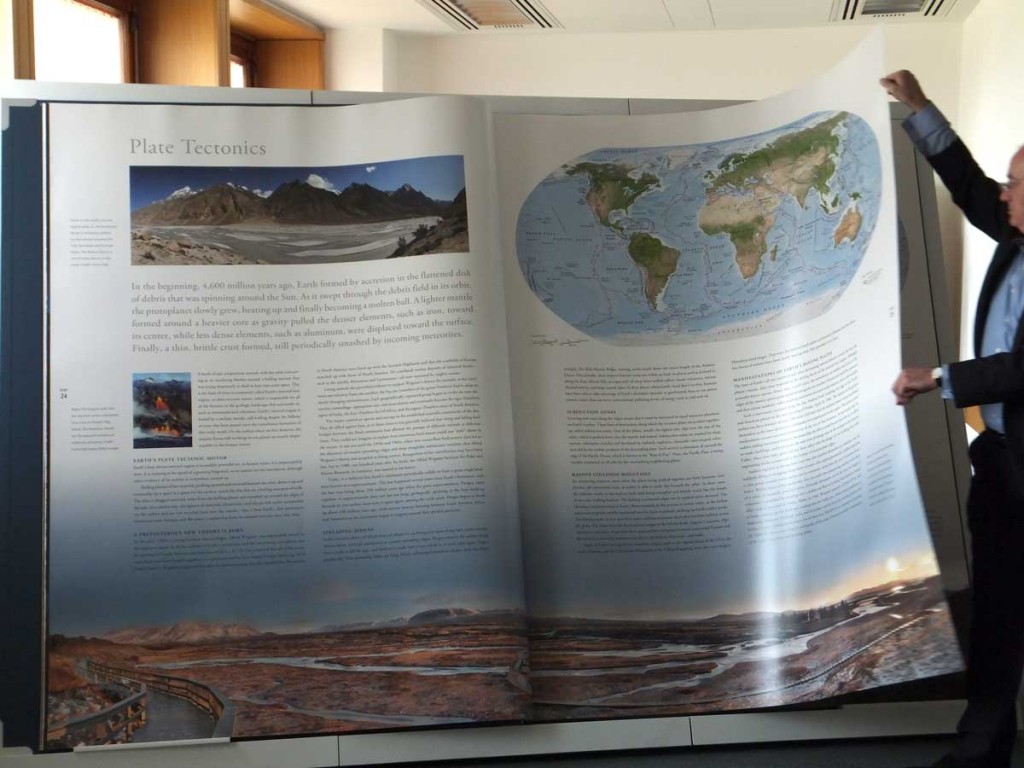
That has to be one of the biggest reuses of my photo! Earth Platinum is still a record holder in the Guinness Book of World Records for the largest atlas. It was only later that I learned that each copy came at a $100k price so look at how “smart” I was to give it away for free. Call me a fool for not asking for a fee.
Because that is how I work. I seek not to make money from what I create
Along with the British Library, I can trace that the National Library of New Zealand and the State Library of New South Wales bought copies, as well as the National Centre of Documentation & Research (United Arab Emirates) and “private collectors” in Saudi Arabia and Australia. That’s a hell of a coffee table book! According to a press release from the State Library of New South Wales, the Earth Platinum Atlas was printed in Italy and bound in Hong Kong.
Gordon cheers had emailed a picture of the Altas at the Hong Kong Bindery
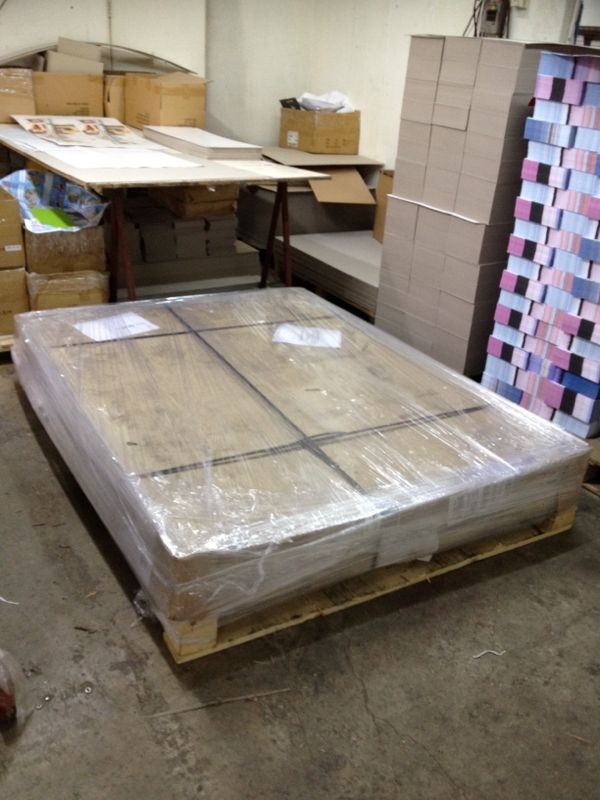
He must have thought I was a high flyer (who was dumb enough not to ask for a photo fee) as he invited be to the launch at the National Centre of Documentation & Research in Abu Dhabi.
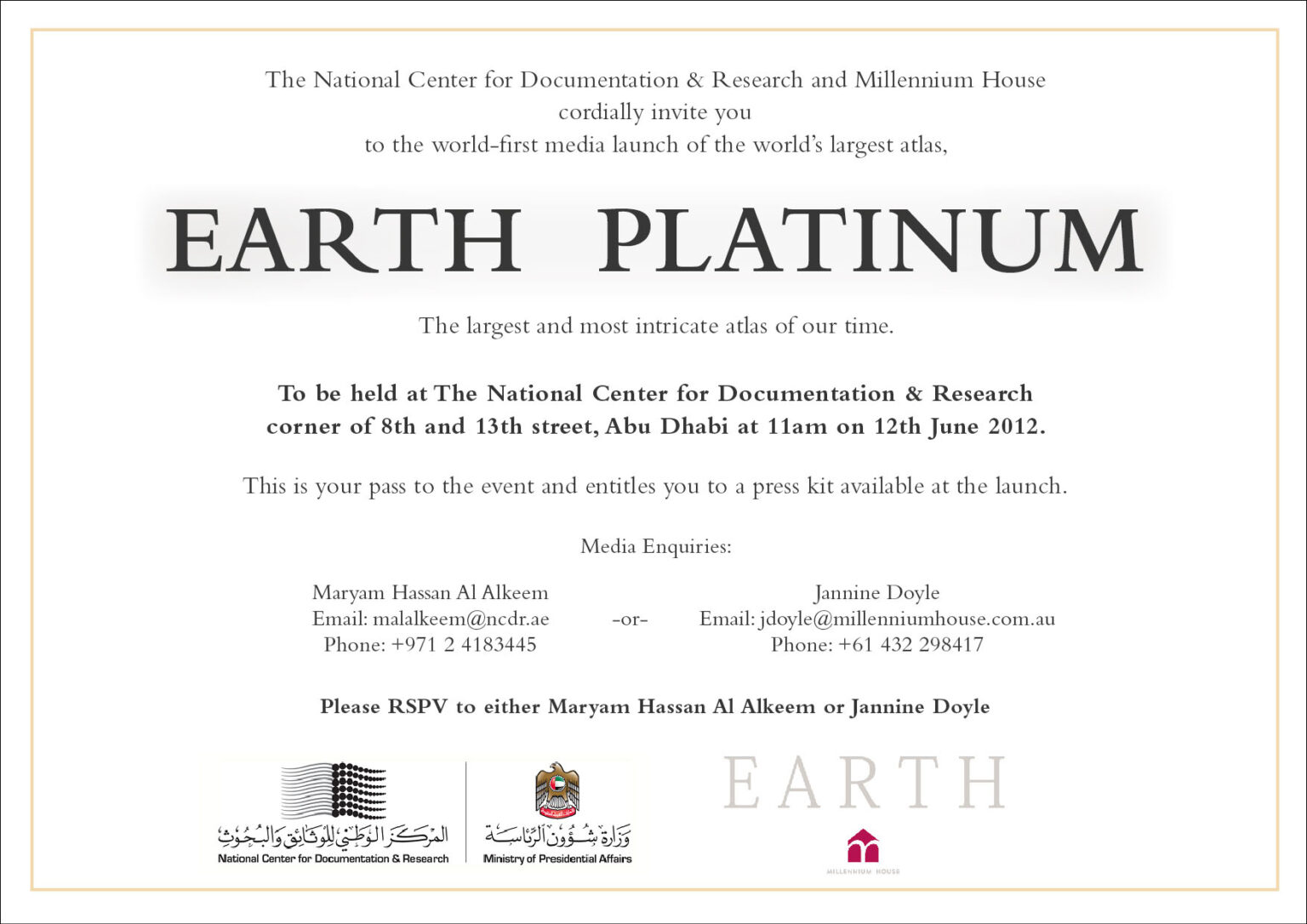
Alas I was busy June 12, 2012 as apparently I was hanging out with Scott Leslie in Vancouver and also sitting in Brian Lamb’s then office at UBC booting up the old CAREO server.
Didn’t I Blog This?
Heck yeah, in August 2012, I posted this tale of the Big Atlas
But when i visited the post this week, it was full of dead links, and missing a lot of details I found in old emails from Millennium House. So instead of blogging something new, I was rewriting old posts, which I do enjoy. There’s so much more to the story, and it swings full force to 2026 and then back to 2008– through connections and paths that no LLM could ever model, and even if it did, it would never have the experience of being alone making images at Thingvellir and getting weird requests from Australian publishers.
More on the GigaPan
And then there is that weird device I had in my possession. I came across it via my colleague Keene Haywood when we worked together briefly at the New Media Consortium. Keene was keenly savvy with both tech and connections, and it was his Austin connections to an outfit called Charmed Labs that was working on the prototype. Keene set it up so I could get one of the GigaPan prototypes before they went into production.
And it is only in 2026 that I came across the place this device had in science and technology back in an era where people did this crazy wild efforts- the GigaPan was a NASA Mars Research funded project in conjunction with Carnegie Mellon University (remember the guy who showed up at Thingvellir and recognized my GigaPan?) – this was one of several CMU efforts under the Global Connection Project.
The technology behind the Mars rover PMAs inspired Randy Sargent at Ames Research Center and Illah Nourbakhsh at Carnegie Mellon University (CMU) to look at ways consumers might be able to use similar technology for more “down-to-Earth” photography and virtual exploration.
In 2005, Sargent and Nourbakhsh created the Global Connection Project, a collaboration of scientists from CMU, Google Inc., and the National Geographic Society, whose vision is to encourage better understanding of the Earth’s cultures through images. This vision inspired the development of their Gigapan products.
After seeing what the Pancams and PMAs could do, Sargent created a prototype for a consumer-version of a robotic camera platform. He worked with Rich LeGrand of Charmed Labs LLC, in Austin, Texas, to design and manufacture the Gigapan robotic platform for standard digital cameras.
https://marsdaily.com/nasa-derived-technology-captures-unique-inaugural-image-999/
The GigaPan goes big — At President Obama’s 2009 inauguration., photographer David Bergman used the device to create a 1.6 GigaPixel immersive scene of this event as reported in Wired as 1.4 Gigapixel Image of the Inauguration Shows the Day in Amazing Detail this using the same rig I used at Thingvellir.
For some reason I kept my GigaPan device, even though the software it once used does no longer work. It sits on my camera museum shelf with a Zoom Master, an old Olympus DSLR, a Kodak Pony camera, and my grandmother’s old Polaroid. Again, these are objects but each is a story, a strand of memories, that flow through me.
Just a mention of Thingviller from Stephen Downes sent me down a trail of discovery and rediscovery, it took sifting through captions in old photos, finding emails, and some good old fashioned web search.
This web thing, it still works. Big.
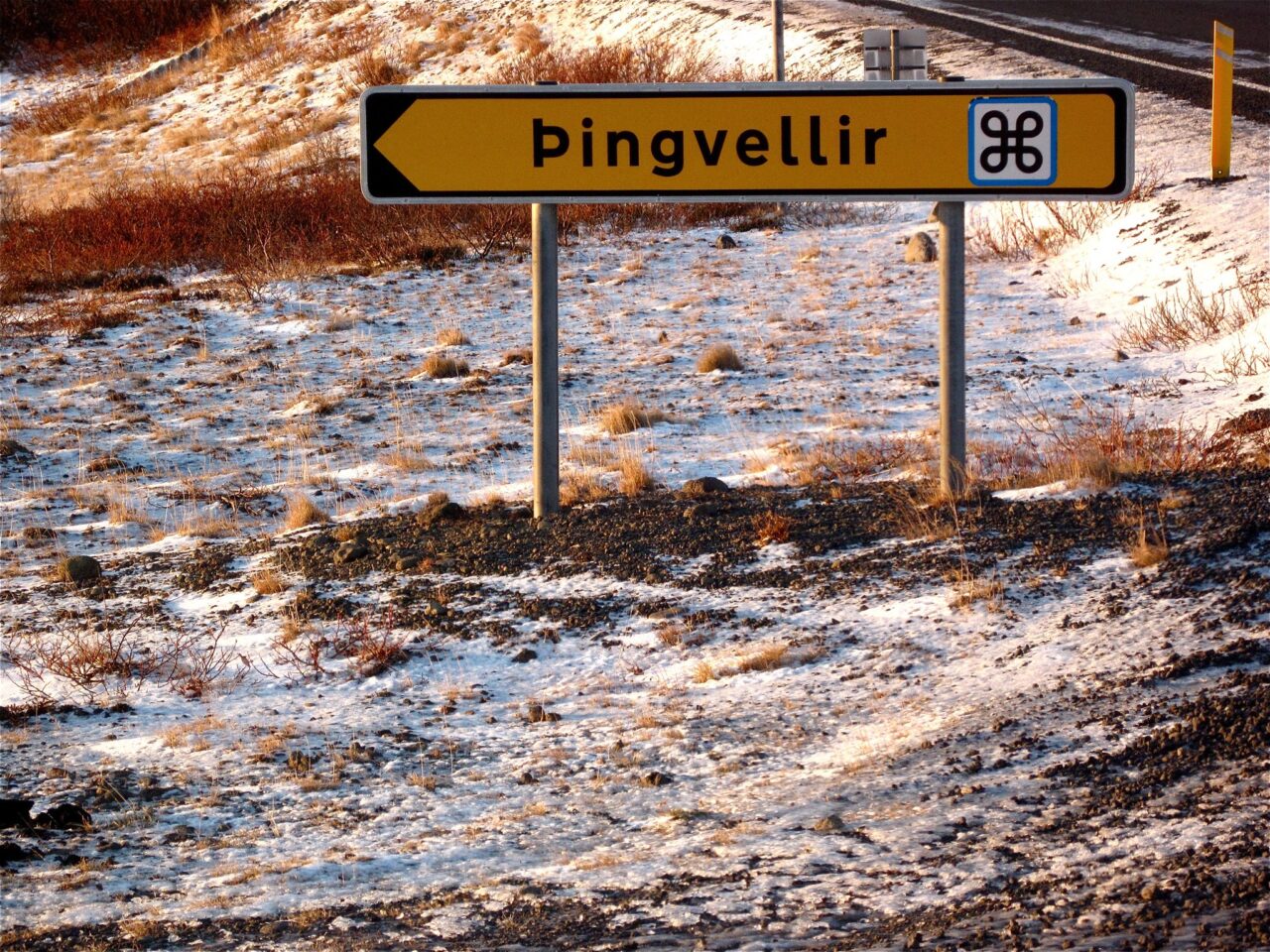
Featured Image: Thingvellir flickr photo by cogdogblog shared into the public domain using Creative Commons Public Domain Dedication (CC0)
 Share this barking on social media
Not unlike the Johnny Cash song, You Too have been Everywhere,… man!
That’s such a cool story. I posted your Thingvellir photo with mine when I visited Iceland a few years ago. Next time I go to London, I want to see that book!
Why are some towns in Iceland offering free and open source software, and what’s with the town signs having the Apple command key?
Apple’s deisgners borrowed the symbol known as St John’s Arms, nifty story on another sighting
https://www.flickr.com/photos/cogdog/3016774326/
I just knew it would have been something you wrote about in the olden times. Thanks!